

Data Center Decommissioning
tructured Decommissioning for Critical Data Center Environments
Linix Tech supports data center decommissioning projects with coordinated field execution across equipment disconnects, cabling removal, infrastructure cleanup, asset transition, validation, documentation, and project closeout.
Whether the project involves a full facility shutdown, partial decommissioning, consolidation, migration, or removal of legacy infrastructure, our focus is on controlled execution and an organized transition from active systems to a cleared and documented environment.
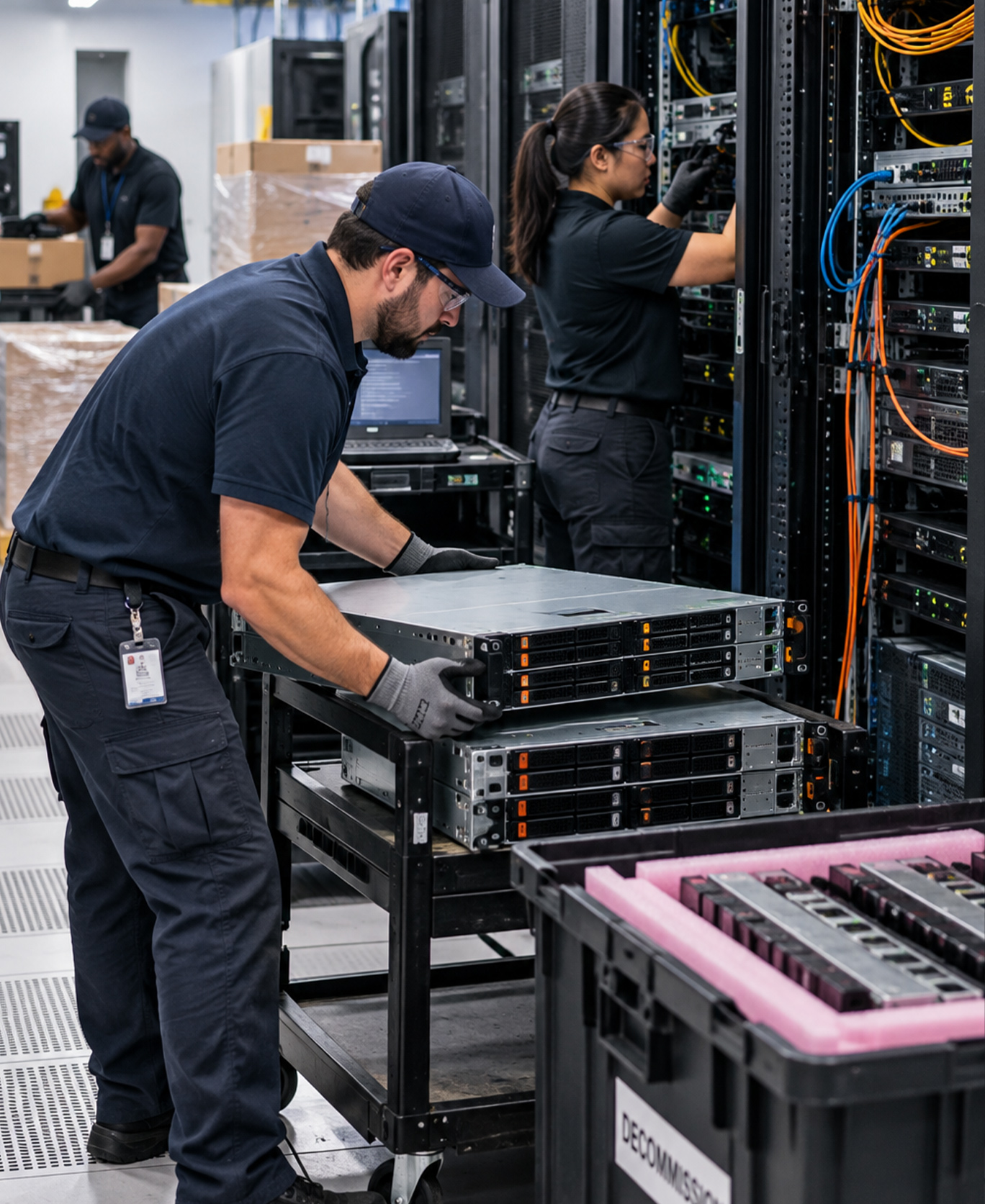
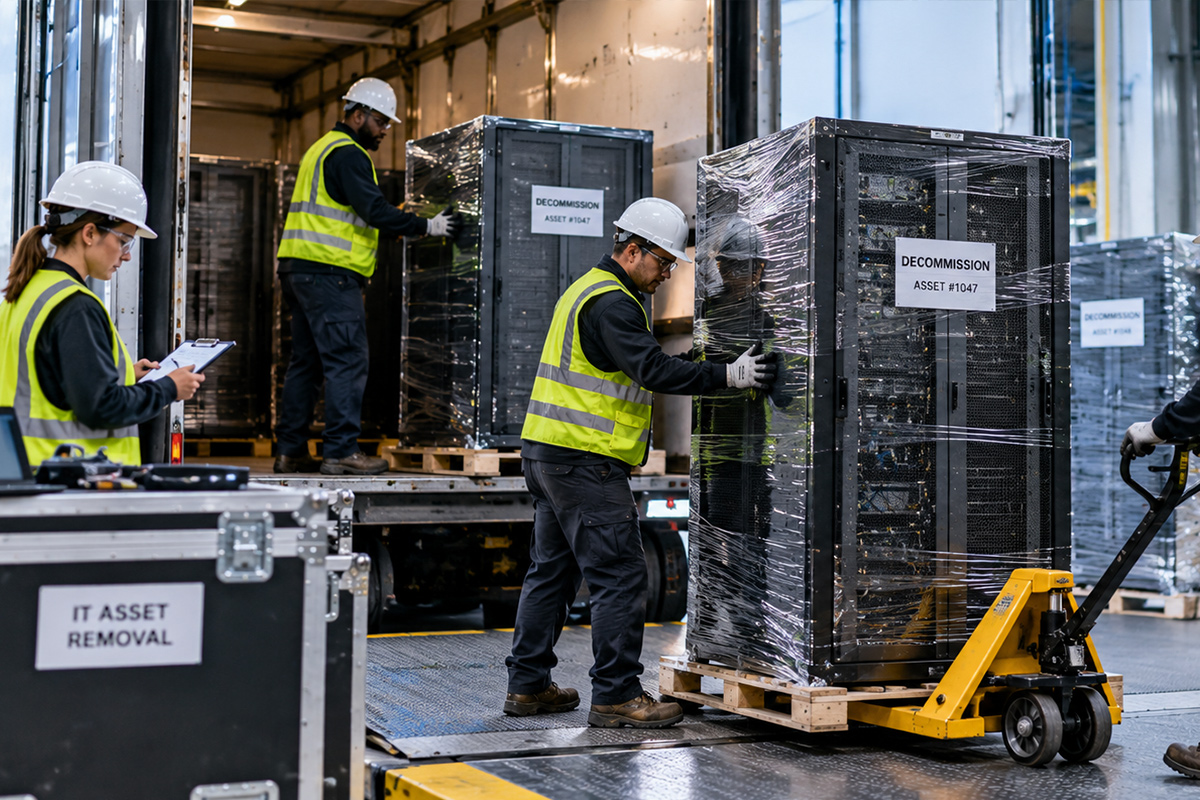
Data center decommissioning is not simply a matter of disconnecting hardware and removing old cabling.
Critical infrastructure may include active network connections, fiber, copper, racks, pathways, power-adjacent systems, labeled dependencies, and legacy equipment that must be handled in the correct sequence.
Linix Tech approaches decommissioning as a controlled infrastructure process that begins with identification and planning and continues through removal, validation, documentation, and closeout.
Data Center Decommissioning Capabilities

Infrastructure Assessment
Before decommissioning begins, the existing environment must be clearly understood.
Linix Tech can support review of racks, cabling, fiber, network connections, equipment, pathways, labels, and infrastructure dependencies to help define what is being retired, retained, relocated, or reused.
Before decommissioning begins, the existing environment must be clearly understood.
Linix Tech can support review of racks, cabling, fiber, network connections, equipment, pathways, labels, and infrastructure dependencies to help define what is being retired, retained, relocated, or reused.
Equipment Disconnect Support
Decommissioning often requires equipment to be disconnected from active infrastructure in a controlled sequence.
Linix Tech can support rack-level disconnects, cable removal, connectivity changes, equipment preparation, and coordination with project teams as part of the broader decommissioning scope.
Cabling Removal
Legacy cabling can create unnecessary congestion and complicate future work if it is left in place.
Linix Tech supports removal of abandoned or retired copper and fiber cabling from racks, pathways, trays, and related infrastructure where included in the project scope.
Fiber & Network Infrastructure Removal
Fiber and network connectivity may need to be removed, rerouted, or reorganized as part of a decommissioning project.
Our teams can support disconnects, patching changes, cable removal, labeling updates, and infrastructure cleanup while coordinating with active systems that remain in service.
Rack & Infrastructure Removal Support
Decommissioning may include the removal of racks, cabinets, patching infrastructure, and related physical systems.
Linix Tech can support organized removal and site preparation based on project requirements.
Legacy Infrastructure Cleanup
Partial decommissioning projects may leave a mix of active and retired infrastructure in the same environment.
Linix Tech helps separate and remove legacy components so the remaining infrastructure is cleaner, easier to manage, and better prepared for future use.
Labeling & Identification Updates
As equipment and connectivity are retired, labeling must reflect the new infrastructure state.
Linix Tech can support removal of outdated identifiers and updates to labels and connectivity records as part of project closeout.
Documentation & Closeout
Decommissioning should leave a clear record of what was removed, retained, relocated, or transitioned.
Project closeout may include updated connectivity information, infrastructure records, testing results, labeling documentation, and other required project materials.
A Controlled Decommissioning Process
Identify
01
Confirm the equipment, cabling, racks, connectivity, and infrastructure included in the decommissioning scope.
Assess Dependencies
02
Review active connections, retained systems, migration requirements, access conditions, and project constraints.
Plan
03
Define the decommissioning sequence, work areas, disconnect activities, removal requirements, and coordination points.
Disconnect
04
Safely remove the required systems and infrastructure from active operations according to the approved project sequence.
Remove & Clean Up
05
Remove retired equipment, cabling, patching, and legacy infrastructure while organizing the remaining environment.
Document & Close Out
06
Update records, confirm the final infrastructure condition, and complete required project documentation.
Decommissioning in Active Data Center Environments
Many decommissioning projects take place while other systems remain operational.
This requires careful coordination around:
- Active network infrastructure
- Existing fiber and copper connections
- Retained equipment
- Shared pathways
- Access restrictions
- Migration dependencies
- Maintenance windows
- Project sequencing
- Other contractors and technical teams
Linix Tech approaches these environments with an emphasis on clearly defined scope and controlled field execution.
Partial Decommissioning
Not every project requires a full facility shutdown.
Linix Tech can support partial decommissioning involving:
- Retired racks
- Legacy cabling
- Unused connectivity
- Equipment consolidation
- Network reconfiguration
- Infrastructure cleanup
- Selective removal of obsolete systems
Full Data Center Decommissioning
When an entire environment is being retired, decommissioning becomes a multi-stage infrastructure project.
The scope may include:
- Equipment disconnects
- Rack-level infrastructure removal
- Fiber and copper removal
- Patch panel removal
- Cabling cleanup
- Network transition support
- Labeling updates
- Documentation
- Final site turnover
Linix Tech supports the field execution required to move the environment from active operation to completed closeout.
Decommissioning After Migration
Data center migration and decommissioning are often part of the same project lifecycle.
Once infrastructure has been successfully transitioned to a new environment, the previous site may still require:
- Legacy equipment removal
- Cabling removal
- Rack cleanup
- Connectivity changes
- Labeling updates
- Documentation
- Final infrastructure closeout
Supporting Data Center Consolidation
Organizations may consolidate infrastructure to reduce unused capacity, simplify operations, or transition to new technology.
Decommissioning support can include:
- Removal of redundant equipment
- Cabling cleanup
- Rack consolidation
- Network reconfiguration
- Fiber changes
- Infrastructure documentation
- Preparation for future use
Preparing Space for What Comes Next
Decommissioning is often the first step toward reuse, expansion, renovation, or a new deployment.
An organized decommissioning process can help create a cleaner environment for:
- New racks
- New cabling
- GPU infrastructure
- Network upgrades
- Facility reconfiguration
- Future data center deployment
Linix Tech approaches decommissioning with the final condition of the environment in mind, not just the removal work.
- Controlled Field Execution
Decommissioning work is organized around project scope, dependencies, access requirements, and defined work sequences.
- Infrastructure-Focused Approach
We understand how racks, fiber, cabling, network connectivity, and physical infrastructure interact during transition.
- Migration + Decommissioning Capability
Linix Tech can support both the move into a new environment and the structured removal of legacy infrastructure from the old one.
- Closeout Matters
Removal is only part of the project. Labeling, organization, validation, documentation, and final turnover help complete the infrastructure transition.
From Active Infrastructure to a Clean Turnover
A successful decommissioning project should leave behind clarity.
Systems that remain should be organized. Retired infrastructure should be removed according to scope. Documentation should reflect the updated environment. The space should be ready for closure, reuse, renovation, or the next deployment.
Linix Tech supports that transition through coordinated field execution from initial assessment through final closeout.
Planning a full facility decommissioning, partial infrastructure removal, post-migration cleanup, rack consolidation, or legacy cabling removal?
Tell us about your site, current environment, decommissioning scope, and timeline.