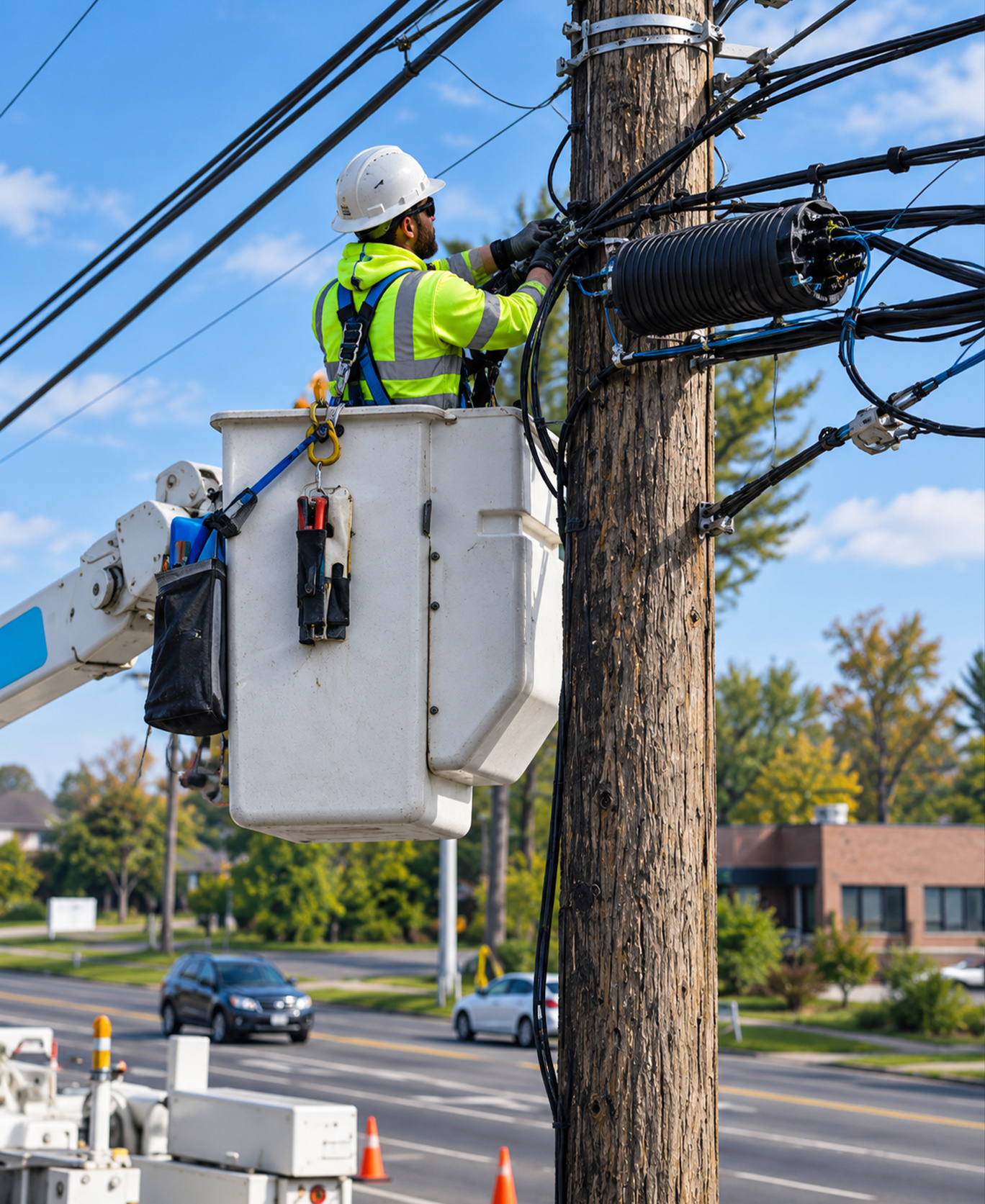
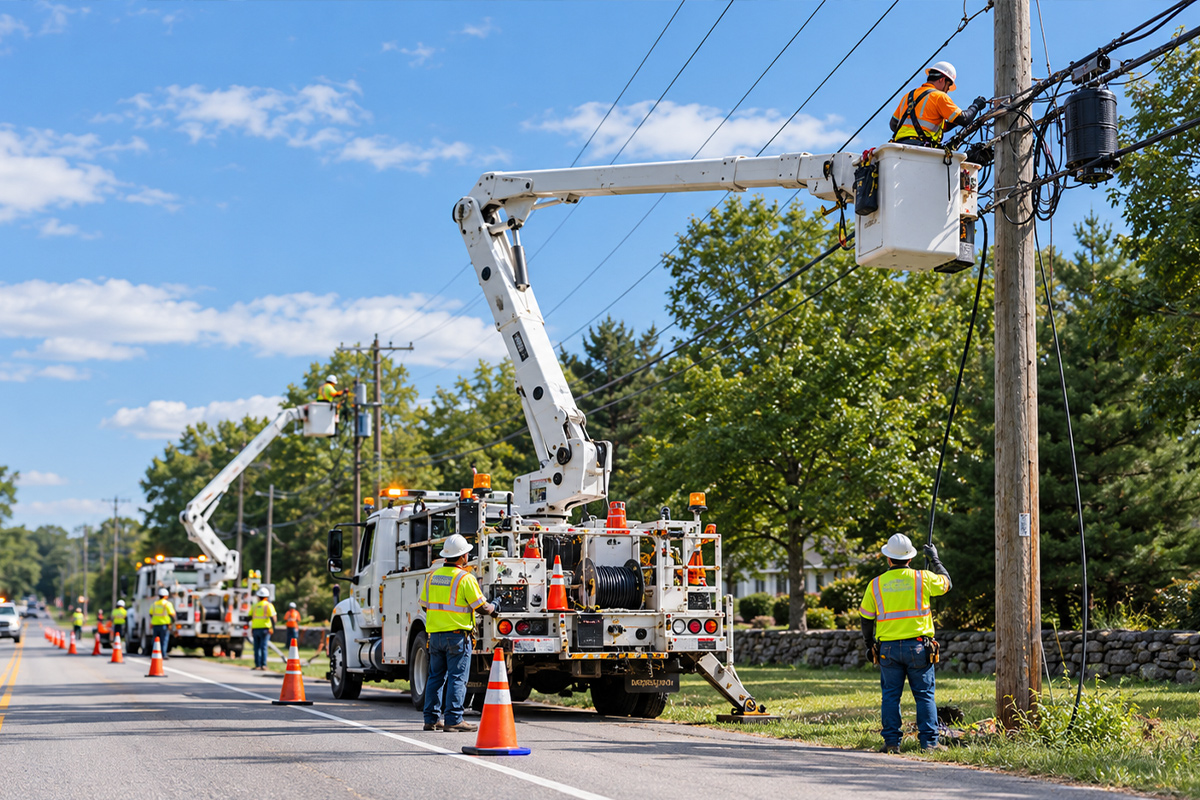
Aerial Fiber Construction
Aerial Fiber Infrastructure Built for Reliable Network Deployment
Linix Tech supports aerial fiber construction projects for telecommunications, commercial, and critical infrastructure environments.
From new route deployment and network expansion to fiber placement, splicing coordination, testing, and project closeout, our teams provide the field execution required to move aerial fiber infrastructure from construction to operational connectivity.
Aerial fiber construction involves much more than placing cable between utility poles.
Successful deployment requires coordination across route conditions, existing infrastructure, pole access, cable placement, fiber management, splicing, testing, documentation, and project sequencing.
Linix Tech supports the physical field work required to build and expand aerial fiber networks in an organized and scalable way.

Aerial Fiber Construction Capabilities
Fiber Placement
Aerial fiber placement for new network construction, route extensions, capacity expansion, and infrastructure upgrades.
Fiber is routed and installed according to the project design, existing infrastructure, and field conditions.
Route Expansion
Existing fiber networks may require additional routes, extensions, or increased capacity.
Linix Tech supports aerial construction projects that extend connectivity into new service areas, facilities, and network locations.
Pole-Line Infrastructure
Aerial construction requires careful coordination with existing pole-line infrastructure and the conditions encountered along the route.
Our field teams work around project requirements, existing communications infrastructure, access conditions, and approved deployment plans.
Cable Routing & Organization
Consistent routing and cable organization help create infrastructure that is easier to inspect, maintain, expand, and troubleshoot.
Linix Tech focuses on disciplined cable placement and field organization throughout the route.
Splicing Coordination
Fiber construction and fiber splicing are closely connected stages of network deployment.
Linix Tech can support aerial fiber projects that also require:
- Single-Fiber Splicing
- Ribbon Fiber Splicing
- Fiber connectivity
- Testing
- Troubleshooting
- Validation
Testing & Validation
The finished route must deliver reliable connectivity.
Depending on the project scope, Linix Tech supports fiber testing, connectivity verification, troubleshooting, and validation before project closeout.
Documentation & Closeout
Project closeout may include route documentation, testing information, infrastructure records, labeling, and other required project materials.
Accurate documentation helps support future maintenance, upgrades, and network expansion.
New Aerial Fiber Builds
Linix Tech supports new aerial fiber infrastructure from initial field deployment through connectivity and validation.
Project scope may include:
- New aerial fiber routes
- Fiber cable placement
- Route extensions
- Network connections
- Splicing support
- Testing and validation
- Documentation and turnover
- Quality review before turnover
Fiber Network Expansion
Growing communications networks often require additional capacity and extended routes.
Linix Tech supports aerial fiber expansion for projects involving:
- New service areas
- Additional network capacity
- Route extensions
- Facility connectivity
- Infrastructure upgrades
- Existing network expansion
A Coordinated Aerial Fiber Deployment Process
Assess
01
Review project scope, route requirements, existing infrastructure, access conditions, and network objectives.
Plan
02
Define deployment sequencing, work areas, routing requirements, coordination points, and project priorities.
Deploy
03
Perform aerial fiber placement and related field construction according to the approved project scope.
Connect
04
Complete or coordinate required fiber connectivity and splicing activities.
Test & Validate
05
Verify connectivity and fiber performance according to project requirements.
Document & Close Out
06
Aerial fiber construction frequently takes place around active telecommunications infrastructure, existing utility routes, commercial properties, roadways, and other field conditions.
Linix Tech approaches these projects with an emphasis on coordination, defined work sequencing, organized deployment, and clear communication between project teams.
Construction, Splicing & Testing as One Infrastructure Process
A reliable fiber network depends on every stage of deployment.
Cable placement creates the route. Splicing establishes connectivity. Testing verifies performance.
Treating these activities as connected stages helps create a more controlled transition from physical construction to an operational fiber network.
Supporting Larger Infrastructure Projects
Aerial fiber construction can also be part of a broader infrastructure deployment involving:
- Underground infrastructure
- Fiber splicing
- Data center connectivity
- Structured cabling
- Network infrastructure
- Commercial facility connectivity
Linix Tech can support multiple infrastructure disciplines within the larger project scope.
Built for Network Growth
Fiber networks continue to expand as organizations require more capacity, faster connectivity, and broader infrastructure coverage.
Linix Tech supports aerial fiber construction with an emphasis on reliable field execution, organized deployment, testing, and infrastructure that can support future network growth.
- Field-Focused Execution
Our teams work around real route conditions, existing infrastructure, access requirements, and project environments.
- Fiber Infrastructure Capability
Construction, fiber placement, splicing, testing, and connectivity can be coordinated within the broader project scope.
- Multi-Discipline Support
Aerial fiber can be integrated with underground infrastructure, data center connectivity, structured cabling, and network deployment.
- Project Lifecycle Support
Our involvement can extend from construction and connectivity through testing, validation, documentation, and closeout.
Planning a new aerial fiber route, network expansion, infrastructure upgrade, or route extension?
Tell us about your project location, route, fiber requirements, scope, and timeline.