

Aerial
Aerial Infrastructure Built for Reliable Connectivity
Linix Tech supports aerial communications infrastructure projects with coordinated field execution across fiber and coax construction, cable placement, splicing coordination, testing, validation, and project closeout.
From new network deployment and route expansion to infrastructure upgrades, our teams support the field work required to build reliable aerial connectivity across commercial and telecommunications environments.
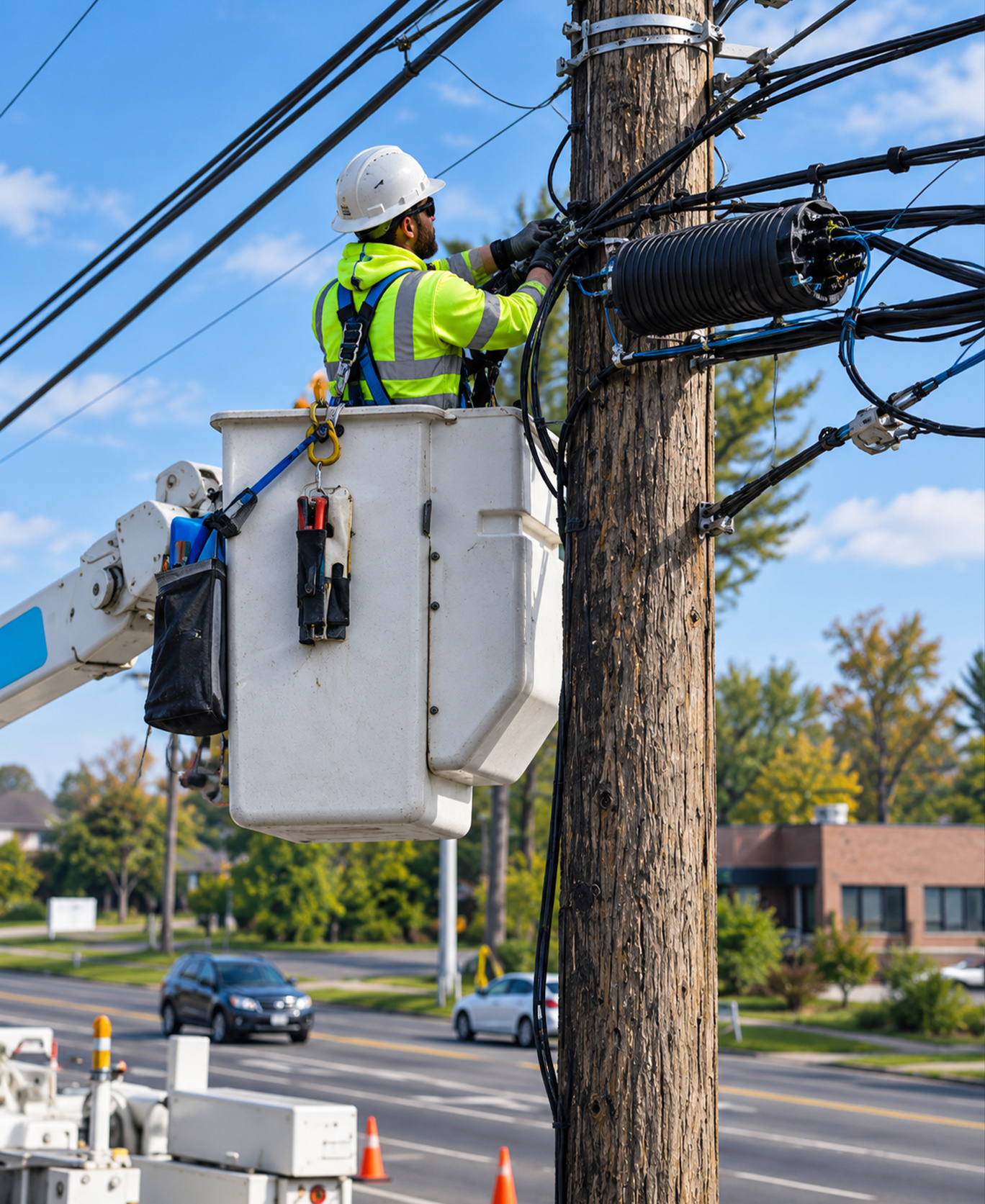
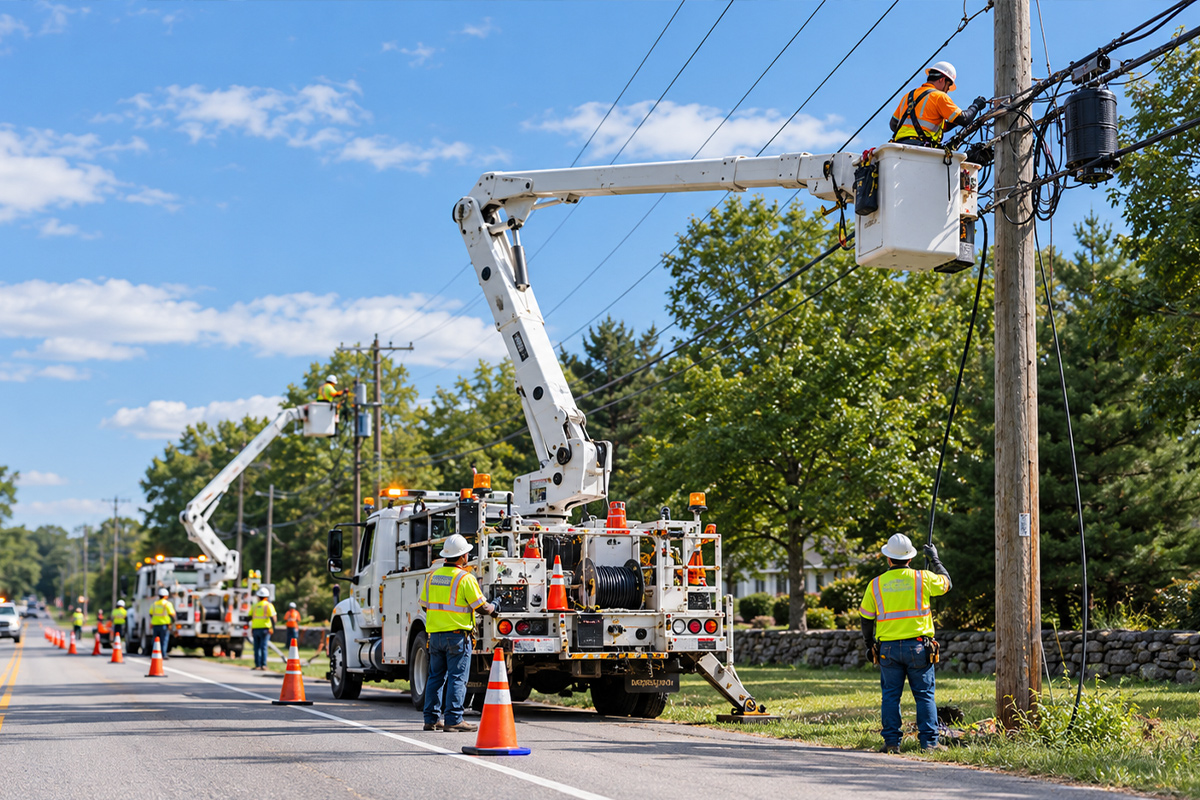
Aerial infrastructure connects communities, facilities, networks, and critical systems across long-distance routes.
Successful deployment requires more than placing cable on utility poles. Route conditions, existing infrastructure, access, sequencing, cable management, coordination, testing, and documentation all affect the quality and maintainability of the finished network.
Linix Tech approaches aerial construction as a complete field deployment process from project preparation through final validation.
Aerial Infrastructure Services

Aerial Fiber Construction
Linix Tech supports aerial fiber infrastructure for new network builds, expansions, upgrades, and connectivity projects.
Field capabilities may include fiber placement, routing, infrastructure coordination, cable organization, connection preparation, splicing support, testing, and validation according to project requirements.
Coax Construction
Linix Tech supports aerial coax infrastructure for telecommunications and communications network projects.
Our teams can support new deployment, infrastructure expansion, cable placement, routing, connection work, upgrades, and field coordination within the approved project scope.
From Route to Connectivity
Aerial construction begins before cable is installed.
Each project must account for the existing environment, route requirements, access conditions, infrastructure already in place, project sequencing, and the final network design.
Linix Tech supports the field execution required to move an aerial infrastructure project through each stage — from route preparation and deployment through connectivity, testing, and closeout.
Aerial Fiber Construction
Fiber networks depend on consistent field execution across the entire route.
Linix Tech supports aerial fiber deployment for:
- New fiber infrastructure
- Network expansion
- Route extensions
- Infrastructure upgrades
- Commercial connectivity
- Telecom network projects
- Fiber placement
- Splicing coordination
- Testing and validation
- Project closeout
Coax Infrastructure
Coax continues to support communications infrastructure in environments where existing or new network requirements call for it.
Linix Tech supports coax construction as part of broader aerial network deployment, expansion, and infrastructure upgrade projects.
This capability allows fiber and coax requirements to be coordinated within a broader communications infrastructure scope.
- Assess
Review the project scope, route, existing infrastructure, access conditions, network requirements, and field environment.
- Plan
Define work sequencing, deployment areas, cable routing requirements, coordination points, and project priorities.
- Deploy
Perform aerial fiber or coax construction and cable placement according to the approved project scope.
- Connect
Coordinate required connectivity, splicing, termination, or related infrastructure work.
- Test & Validate
Verify network connectivity and completed infrastructure based on project requirements.
- Document & Close Out
Complete required records, testing information, project documentation, and final turnover.
Aerial projects frequently take place around existing telecommunications infrastructure, public rights-of-way, commercial properties, and active network environments.
Field work must be coordinated around access, existing systems, site conditions, project schedules, and other crews operating within the same environment.
Linix Tech focuses on organized execution and clear coordination throughout the project lifecycle.
As network demand grows, existing routes may need additional fiber capacity or entirely new infrastructure.
Linix Tech supports projects involving:
- New aerial fiber routes
- Existing network expansion
- Additional fiber capacity
- Route extensions
- Infrastructure upgrades
- Telecom network projects
- Connection to commercial facilities
- Integration with broader fiber networks
Aerial construction ultimately has to deliver reliable connectivity.
Depending on the project scope, Linix Tech can support or coordinate:
- Single-fiber splicing
- Ribbon fiber splicing
- Connectivity verification
- Fiber testing
- Troubleshooting
- Network validation
- Documentation
Aerial construction may be one part of a larger network deployment.
Linix Tech can support projects that also involve:
- Underground infrastructure
- Fiber splicing
- Data center connectivity
- Structured cabling
- Network infrastructure
- Commercial facility connectivity
Communications networks continue to expand as organizations require greater capacity, faster connectivity, and more resilient infrastructure.
Linix Tech supports aerial construction with an emphasis on reliable field execution, organized deployment, and infrastructure that can support future network growth.
Why Linix Tech
Field-Focused Execution
Fiber & Coax Capability
Linix Tech supports both aerial fiber and coax construction as part of communications infrastructure projects.
Connected Infrastructure Expertise
Aerial construction can be coordinated with fiber splicing, underground infrastructure, structured cabling, and network deployment.
Project Lifecycle Support
Our involvement can extend from deployment and connectivity through testing, validation, documentation, and closeout.
Aerial infrastructure is only successful when the finished network performs as intended.
Linix Tech supports the field work behind that connection — helping move communications infrastructure from route and cable placement to validated, operational connectivity.
Planning an aerial fiber build, coax construction project, network expansion, route extension, or infrastructure upgrade?
Tell us about your project location, route, infrastructure requirements, scope, and timeline.